ByJohn A
How 3 Phase Pad Mounted Transformers Support Modern Electrical Distribution
Electrical distribution systems need equipment that can handle changing loads, outdoor conditions, safety requirements, and long operating periods without demanding excessive maintenance. Transformers are central to this process because they adjust voltage levels so electricity can move efficiently through a distribution network and reach homes, businesses, industrial facilities, and other connected loads.
Among the equipment used in medium-voltage distribution, pad-mounted transformers provide a practical option for installations where overhead transformer structures are unsuitable or where an underground electrical network is preferred. A 3 phase pad mounted transformer is designed to serve three-phase electrical systems while remaining enclosed in a secure, ground-level cabinet.
What Is a Pad-Mounted Transformer?
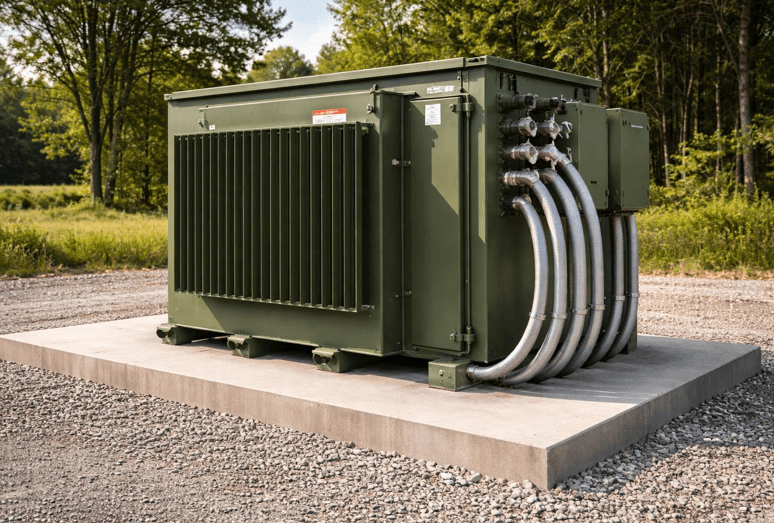
A pad-mounted transformer is an electrical transformer installed on a concrete pad or similar stable foundation. Instead of being suspended from utility poles, the transformer sits at ground level and connects with underground electrical cables.
The enclosure normally contains the transformer, connection points, protective components, and other equipment required for safe operation. The cabinet is designed to restrict unauthorized access while allowing qualified electrical personnel to perform inspection, testing, and maintenance.
This arrangement can be useful in residential developments, commercial properties, industrial sites, renewable energy installations, and utility distribution networks. Ground-level installation can also provide a cleaner appearance compared with overhead distribution equipment.
How Three-Phase Distribution Works
Three-phase electrical systems use three alternating currents that operate with a defined phase relationship. This arrangement allows electrical power to be delivered efficiently to many types of equipment and is widely used in commercial and industrial applications.
A transformer connected to a three-phase system can change the incoming voltage to a lower or higher level according to the requirements of the electrical network. In a distribution application, the transformer commonly reduces medium voltage to a usable secondary voltage for downstream equipment.
A three phase pad mount transformer therefore has an important role between the utility distribution network and the electrical loads receiving power. Its rating, voltage ratio, impedance, winding arrangement, and other characteristics must match the requirements of the installation.
Main Components and Construction
The construction of a pad-mounted unit varies according to its application and manufacturer, but several components are commonly found inside the enclosure.
Transformer Core and Windings
The magnetic core provides the path for magnetic flux, while the windings transfer electrical energy between voltage levels. The winding arrangement is selected according to the required input and output configuration.
Copper or aluminium conductors may be used for windings depending on the design. Insulation systems are selected to withstand the electrical, thermal, and mechanical conditions expected during service.
Enclosure
The enclosure protects internal components from weather, accidental contact, and environmental exposure. It may include separate compartments for high-voltage and low-voltage connections.
Cabinet design also affects access for maintenance personnel. Locking mechanisms and barriers help reduce the possibility of unauthorized contact with energized components.
Cooling System
Transformers generate heat during operation because of winding and core losses. Oil-filled distribution transformers commonly use insulating fluid to provide electrical insulation and assist with heat transfer.
The enclosure and tank design help dissipate heat into the surrounding environment. Correct transformer sizing is essential because excessive loading can increase operating temperatures and shorten equipment life.
Where These Transformers Are Used
Pad-mounted three-phase equipment can serve many types of electrical installations.
Commercial buildings often require three-phase power for air-conditioning systems, pumps, elevators, refrigeration equipment, and other larger loads. Industrial facilities may need transformers to supply motors, production equipment, control systems, and plant services.
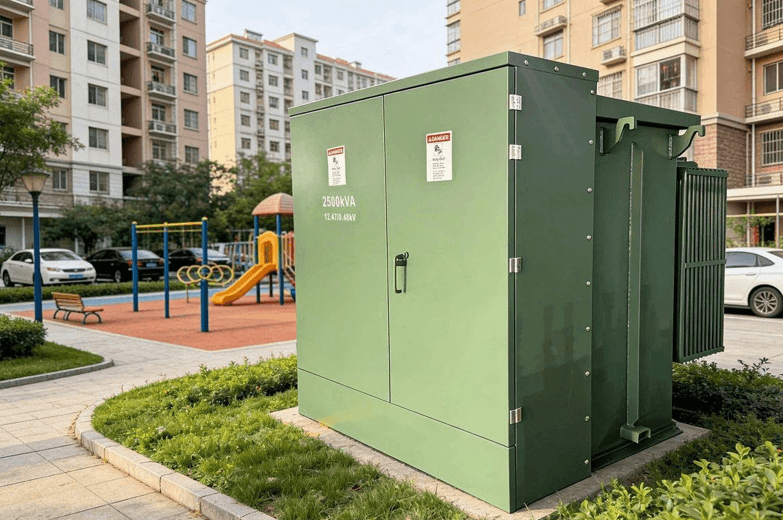
Residential developments can also use ground-level distribution transformers where underground electrical infrastructure has been selected. Schools, hospitals, shopping centres, data facilities, and infrastructure projects may have similar requirements.
Renewable energy projects represent another application. Solar and other distributed generation systems may require transformers to connect electrical output with a local distribution network at an appropriate voltage.
Choosing the Correct Transformer Rating
Selecting a transformer should begin with an assessment of the electrical load. The required capacity is commonly expressed in kilovolt-amperes (kVA).
A transformer that is too small may experience excessive loading and increased temperature. Oversizing can also create unnecessary equipment and installation costs. Engineers therefore consider present demand, expected future loads, operating conditions, and load characteristics.
Voltage requirements must also be checked carefully. The primary voltage, secondary voltage, frequency, phase configuration, grounding arrangement, and connection type should correspond with the electrical system.
Environmental conditions matter as well. Temperature, altitude, moisture, contamination, available installation space, and accessibility can influence equipment selection.
Installation Considerations
A pad-mounted transformer requires a suitable foundation capable of supporting its weight and maintaining stable positioning. The location should provide adequate clearance and allow qualified personnel to access the enclosure safely.
Underground cables must be routed according to the applicable electrical design and local requirements. Cable bending radius, termination arrangements, grounding, and protection should all be considered during installation.
Drainage is another practical consideration. Standing water around electrical equipment can create environmental and maintenance problems, so the installation area should be designed to manage water effectively.
Clear identification and appropriate warning signage can help maintenance teams recognize electrical hazards before work begins.
Maintenance and Inspection
Routine inspection helps identify developing problems before they cause equipment failure. Maintenance schedules depend on the transformer type, operating environment, utility requirements, and applicable standards.
Visual inspections may identify damaged enclosures, corrosion, fluid leakage, unusual noise, overheating indications, or damaged cable connections. Electrical testing may also be required as part of planned maintenance or troubleshooting.
Insulating fluid can require testing in oil-filled units. Such testing can provide information about moisture, dielectric strength, and other conditions affecting transformer performance.
Any inspection or maintenance involving energized equipment should be carried out by properly qualified personnel using procedures appropriate for the installation.
Safety Around Pad-Mounted Equipment
Ground-level transformers should never be treated as ordinary outdoor cabinets. Internal components can carry dangerous electrical voltages even when the equipment appears inactive.
Access should be restricted to authorized and trained personnel. The surrounding area should remain clear of objects that could interfere with ventilation, access, or maintenance activities.
Vehicle traffic should also be considered during site planning. In locations exposed to vehicle movement, physical protection may be necessary to reduce the risk of impact damage.
Following applicable electrical codes, utility specifications, manufacturer instructions, and site safety procedures is essential throughout installation and service.
Comparing Ground-Level and Pole-Mounted Equipment
Pole-mounted transformers are commonly associated with overhead electrical distribution, while pad-mounted units are generally used with underground cable networks.
Ground-level installation can reduce visual clutter and may be suitable for developments where overhead lines are undesirable. Underground distribution can also support planned layouts in commercial and residential projects.
However, site requirements differ from project to project. Available space, access, installation costs, cable routes, load requirements, local regulations, and utility standards all influence the appropriate equipment choice.
Understanding Long-Term Performance
Transformer performance depends on correct specification, installation, loading, environmental conditions, and maintenance. A properly selected 3 phase pad mounted transformer can provide dependable voltage conversion for many years when operated within its rated limits.
Load monitoring can help identify unusual changes in demand. Excessive loading, repeated overheating, poor connections, moisture ingress, and physical damage can all affect service life.
Good documentation also has practical value. Keeping records of transformer ratings, installation details, inspection results, testing, and maintenance history gives electrical teams useful information for future servicing and replacement planning.
See also: Business Class Flights to Cochin: A Guide to Comfortable Air Travel
Final Considerations for Electrical Projects
Choosing distribution equipment requires more than comparing transformer capacity. Engineers and project managers need to consider voltage requirements, load characteristics, site conditions, protection, grounding, accessibility, maintenance, and applicable standards.
A well-specified 3 phase pad mounted transformer can fit efficiently into underground distribution systems while providing the voltage conversion required by commercial, industrial, residential, and infrastructure applications.
Understanding how the equipment is constructed, where it is used, and what affects its performance makes it easier to plan a reliable electrical distribution system. Proper engineering and professional installation remain essential for safe operation throughout the transformer’s service life.